
The contemporary lexicon of self-care often fails to capture the sheer magnitude of an industry that has quietly evolved into a global leviathan. Beauty supply is no longer a mere transactional pit stop for purchasing shampoo or a last-minute tube of mascara. It has become a sprawling ecosystem, a nexus of chemistry, psychology, and commerce. To step into a well-curated beauty supply environment is to witness the material culture of identity being forged, one bottle of serum at a time.
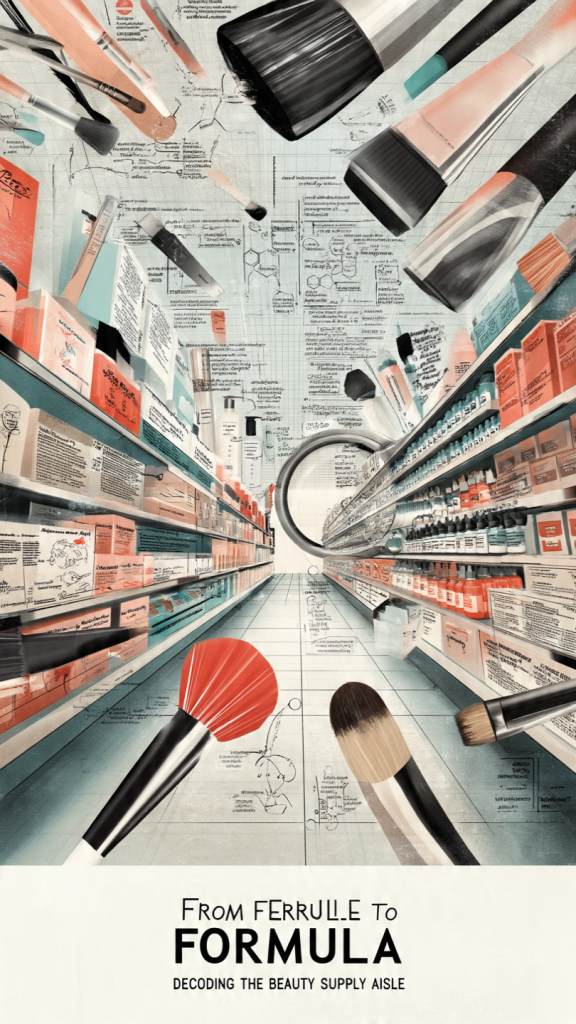
The provenance of these goods is staggering. A single shelf might contain a hyaluronic acid sourced from Japanese biotechnology labs, nestled against a shea butter whipped in a Ghanaian women’s cooperative. Yet, the professional beauty supply channel demands rigor. These are not the diluted formulations found in grocery aisles. Here, actives are potent. The pH of a toner is precise. The bond repair in a leave-in treatment is clinical.
Why does this distinction matter? Because the average consumer is no longer passive. They arrive armed with ingredient glossaries and the latent suspicion of greenwashing. They want the unexpurgated truth about sulfates, the neurobiology of fragrance, and the porosity of their own hair. A legitimate beauty supply house educates before it sells. It traffics in transparency. Without this, the relationship dissolves.
Consider the tactile anthropology of a brush aisle. In a full-service beauty supply, you will find ferrules made from recycled aluminum, bristles that taper like a calligrapher’s quill, and ergonomic handles weighted for carpal-tunnel relief. These are tools, not toys. A cheap synthetic brush sheds. A professional-grade tool becomes an extension of the hand. The beauty supply sector arbitrates this difference.
The rise of “pro-only” stores has further fractured the market. Some beauty supply retailers now require licenses to cross the threshold. This gatekeeping preserves the integrity of chemical peels and high-concentration retinol. Yet, a paradox emerges. The internet has democratized knowledge but flooded the zone with counterfeit goods. One can purchase a “luxury” cream online for forty dollars, only to discover it is a viscous slurry of mineral oil and fragrance. The physical beauty supply store counters this via verifiable supply chains. You see the batch number. You smell the raw material. Trust is haptic.
Let us discuss the hair texture revolution. For decades, the beauty supply industry ignored the coiled, the kinky, and the tightly curled. Not anymore. Modern shelves burst with humidifiers for twist-outs, puddings for wash-and-gos, and sealants that lock in moisture for a week. The inclusive beauty supply recognizes that “normal” hair does not exist. There is only your hair. A brand that denies this fails.
Sustainability remains the thorniest dilemma. Plastic packaging is endemic. A single beauty supply order can yield six layers of bubble wrap and a polystyrene coffin. Progressive suppliers now offer refill stations—stainless steel tanks of conditioner that dispense by weight. Others use mycelium-based pallets. Yet, the cost is high. Refill infrastructure is not cheap. Small beauty supply shops struggle to retrofit their layouts. But the pressure mounts. Customers bring their own jars. They demand zero-waste shipping. Ignore this at your peril.
The economic calculus is brutal. Margins on drugstore brands hover near ten percent. But professional beauty supply lines can reach seventy percent gross profit. The caveat? Education. You must train your staff to know why a vitamin C suspension destabilizes in sunlight. You must demonstrate the difference between an occlusive and a humectant. This knowledge is the moat that protects the beauty supply retailer from Amazon’s relentless efficiency.
Technology has infiltrated every step. AI-powered shade finders now sit on beauty supply websites. Augmented reality lets you “try on” a copper foil or a platinum bob without touching a hair. In-store, digital skin analyzers map your sebum, your wrinkles, your pore depth. The algorithm spits out a regimen. You walk to the shelf. The beauty supply experience becomes a feedback loop of data and desire.
Yet, the human element remains irreplaceable. A chatbot cannot diagnose a broken moisture barrier. A drone cannot look at your fingernails and recommend a keratin builder. The best beauty supply employees are part-dermatologist, part-therapist. They have seen the acne from over-exfoliation. They have consoled the client whose relaxer burned their scalp. This emotional labor is undervalued but essential.
We must also address the grey market. Diverted goods—products meant for salons but sold illegally online—plague the beauty supply sector. A bottle of shampoo from an unauthorized dealer may have sat in a 120-degree warehouse for a year. The preservatives degrade. Bacteria blooms. You pay $12 for a rash. Legitimate beauty supply vendors fight this with holographic seals and blockchain tracking. It is a quiet war.
The future points toward hyper-customization. Imagine a beauty supply kiosk that blends your foundation on-site, adjusting for your exact melanin and undertone. Or a fragrance printer that mixes iso e super with a drop of ambroxan to match your pheromones. These machines exist in prototype. Scaling them is the challenge.
In the interim, the rise of “skin streaming” (fewer products, smarter layering) has simplified the beauty supply shopping list. No more ten-step rituals. Now we see a cleanser, a multitasking serum, a sunscreen, and a sleeping mask. The beauty supply retailer must curate for efficiency. Customers are fatigued. They want the urtext of skincare: what actually works.
Let us not forget the olfactory dimension. A poorly run beauty supply smells of plastic and dust. A great one smells of matcha, sandalwood, and the faintly sterile note of surgical steel. Scent marketing is deliberate. Brands pump lavender to calm indecisive shoppers or grapefruit to energize the morning rush. This is not accidental. The beauty supply environment is a choreographed sensory stage.
Logistics remain the unsung hero. A nationwide beauty supply chain must move fragile glass droppers, aerosol cans, and wax melts that soften in transit. Warehouses are organized by viscosity, by flashpoint, by expiry. One mis-shipment of a flammable hairspray can shut down a depot. The discipline is monastic.
What about the niche? The apothecary-adjacent beauty supply now sells edible lip tints made from beetroot and beeswax, and deodorants fermented with lactobacillus. These are not fads. They signal a hunger for the biocompatible, the edible, the ancestral. A customer does not want to apply petrochemicals to their axillae. They want fermentation, soil, and sunshine.
The price architecture is fascinating. A beauty supply will sell a $300 gemstone roller and a $3 sea salt spray. The roller is for the performative ritual of self-care. The salt spray is for texture. Both serve a function. The mistake is to assume that expensive equals effective. It does not. A good beauty supply educates on value, not just price.
Inventory shrinkage is a silent killer. Theft is rampant, especially of small, high-value items like lipsticks and serums. Some beauty supply chains have resorted to locking cases, which alienates honest shoppers. Others use smart shelves that weigh products in real time. A compromise is the “test and hold” model—empty testers on the floor, sealed product in the back. Annoying but necessary.
The global perspective reveals divergence. In Seoul, a beauty supply store emphasizes cushion compacts and sunscreens with four-star PA ratings. In Paris, the focus is on micellar waters and thermal spring sprays. In Lagos, you find skin-lightening creams next to shea butter, a controversial adjacency but a commercial reality. Localization is not optional. A one-size-fits-all beauty supply strategy fails.
Online versus offline: the dialectic continues. A pure-play e-commerce beauty supply cannot offer a facial massage or a scalp analysis. But a brick-and-mortar store cannot compete with 2 AM ordering. The hybrid solution—buy online, return in-store, pick up curbside—is the current equilibrium. Some chains now offer “virtual queuing.” You scan a QR code. A consultant FaceTimes you from the stockroom. The beauty supply becomes a media studio.
Regulation looms. The FDA has not updated its cosmetics rules since 1938. That may change. New laws may require full disclosure of fragrance allergens (trade secrets be damned). A responsible beauty supply prepares for this. They favor brands that publish glasnost-level ingredient lists. The days of “parfum” as a catch-all are ending.
Finally, the psychology of the beauty supply browse is important. Why do people linger? Because transformation is promised. A lipstick is hope in a bullet. A hair mask is a velvet rope to a better mood. The beauty supply is not selling hydrocarbons and pigments. It is selling potential. The gleam of a just-washed window. The clean slate.
To run a successful beauty supply is to master three domains: inventory science, human empathy, and trend acceleration. Fail at one, and the others crumble. The best operators are obsessive. They know the difference between a hydrogel and a biocellulose sheet. They can spot a counterfeit by the kerning on the box. They remember a customer’s name and their rosacea triggers.
So the next time you enter a beauty supply, look closely. The organization of the shelves tells you what a culture values. Is there space for eczema creams? For psoriasis shampoos? For the transgender man seeking facial hair dye? A generous beauty supply accommodates the edge cases. A narrow one only serves the already-served.
The industry will continue to mutate. We will see biodegradable glitter, waterless tablets that fizz into face wash, and perhaps gene-expression serums that tailor themselves to your DNA. Through it all, the beauty supply remains the intermediary—the crucial node between the laboratory and the bathroom cabinet. It is a fragile trust. Guard it well.
You may also like
-
Clinical Precision in Dermatology: A Multidimensional Analysis of Medical-Grade Solutions for Acne, Eczema, and Sensitive Skin Barriers
-
Targeted Actives for Sensitive Skin: A Multidimensional Analysis of Clinical Efficacy, Ingredient Synergy, and Dermatological Innovation
-
The Science of Skin Barrier Repair: Mechanisms, Therapeutic Innovations, and the Role of Lipid Replenishing Skincare in Modern Dermatology
-
The Evolving Landscape of Medical-Grade Skincare: Clinical Solutions for Acne, Eczema, and Sensitive Skin Barriers in 2024
-
The Gut-Skin-Hormone Axis: A 360-Degree Examination of Internal Triggers in Chronic Skin Conditions