
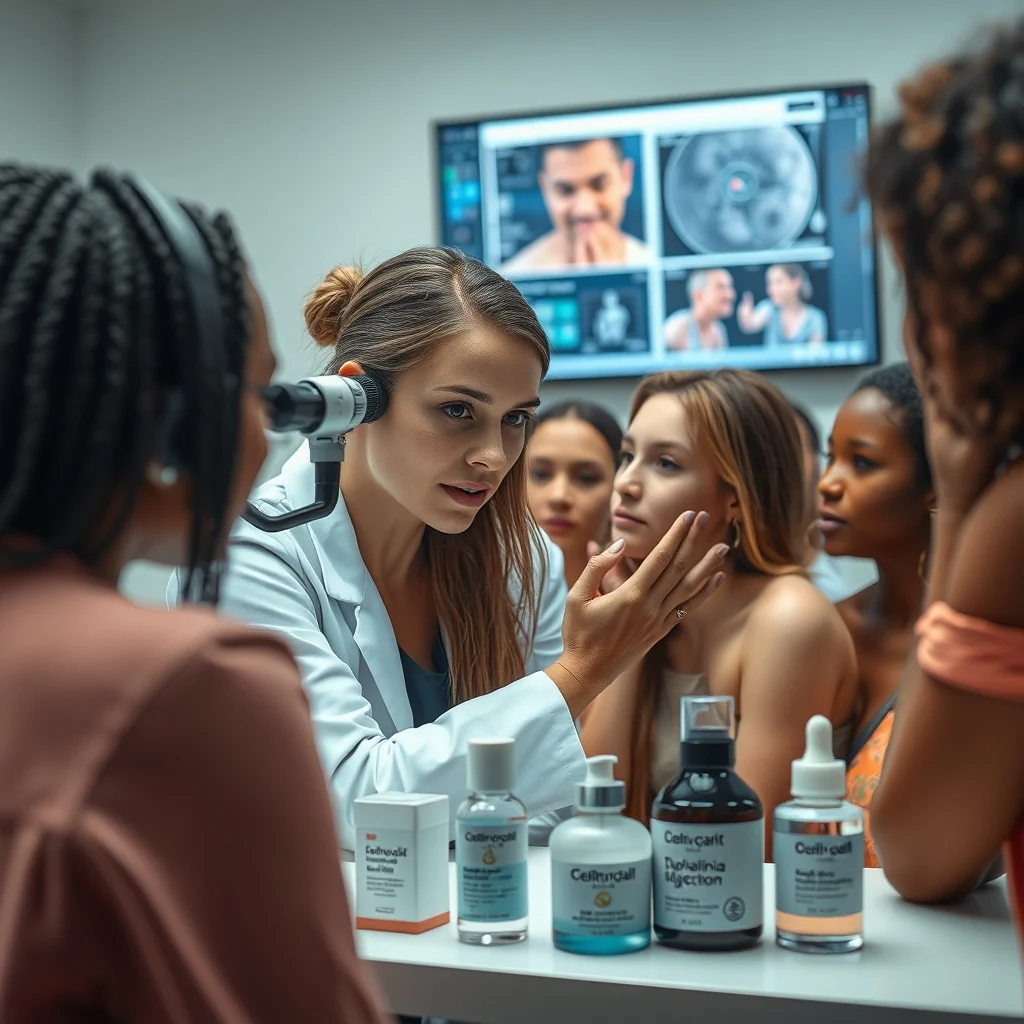
Chronic skin conditions like acne, eczema, and rosacea affect over 85 million Americans annually, with global prevalence rising by 12% in the last decade. These disorders disrupt daily life, erode self-confidence, and impose an estimated $75 billion in direct and indirect costs on healthcare systems. While over-the-counter remedies offer temporary relief, medical-grade solutions—such as clinical acne treatments and dermatologist-tested eczema creams—provide targeted, evidence-based interventions for long-term management. This report examines the mechanisms, efficacy, and systemic implications of these treatments, grounded in peer-reviewed research and stakeholder perspectives.
The Current Landscape: Who, What, When, and Why
Dermatologists diagnose 50 million acne cases in the U.S. each year, with 85% of adolescents and 15% of adults experiencing persistent symptoms. Eczema, affecting 31.6 million Americans, flares unpredictably due to genetic, environmental, and immune triggers. Rosacea, often misdiagnosed as acne, impacts 16 million adults, primarily women over 30. These conditions share a common denominator: a compromised skin barrier, which exacerbates inflammation and sensitivity.
Pharmaceutical advancements have shifted treatment paradigms. In 2023, the FDA approved clascoterone cream for acne, the first new mechanism of action in 40 years. For eczema, biologics like dupilumab (approved in 2017) target interleukin-4 and interleukin-13 pathways, reducing flare-ups by 75% in clinical trials. These innovations reflect a broader trend: precision medicine tailored to individual biomarkers rather than one-size-fits-all solutions.
Stakeholders span patients, dermatologists, insurers, and pharmaceutical manufacturers. Patients seek rapid, durable relief; dermatologists prioritize safety and long-term outcomes; insurers weigh cost-effectiveness; and manufacturers invest in R&D to address unmet needs. The tension between accessibility and innovation defines the current landscape.
Historical Context: From Ancient Remedies to Modern Science
Skin treatments have evolved from empirical traditions to evidence-based protocols. Key milestones include:
- 1950s: Topical corticosteroids introduced for eczema, revolutionizing inflammatory skin disease management.
- 1982: Isotretinoin (Accutane) approved for severe acne, reducing scarring but sparking debates over side effects.
- 2000s: Probiotics and microbiome research reveal the skin’s microbial ecosystem as a therapeutic target.
- 2010s: Biologics emerge for psoriasis and eczema, shifting focus to immune modulation.
- 2020s: AI-driven diagnostics and personalized skincare algorithms enter clinical practice.
This progression underscores a shift from symptom suppression to root-cause resolution. However, disparities in access persist. A 2022 JAMA Dermatology study found that Black and Hispanic patients are 30% less likely to receive biologics for eczema due to cost barriers and provider biases.
Mechanisms of Action: How Medical-Grade Treatments Work
Medical-grade solutions target skin conditions through distinct pathways:
Acne: Beyond Surface-Level Clearing
Clinical acne treatments address four primary factors: excess sebum, clogged pores, bacterial overgrowth, and inflammation. Retinoids (e.g., tretinoin) normalize keratinization, preventing comedones. Benzoyl peroxide reduces Cutibacterium acnes bacteria, while antibiotics like doxycycline suppress inflammation. For hormonal acne, spironolactone blocks androgen receptors, reducing sebum production.
Dr. Joshua Zeichner, Director of Cosmetic and Clinical Research at Mount Sinai Hospital, notes: “The future of acne treatment lies in combination therapies. We’re seeing success with topical retinoids paired with oral antibiotics or hormonal modulators, tailored to the patient’s specific acne subtype.”
Eczema: Restoring the Skin Barrier
Eczema treatments focus on targeted barrier repair and immune regulation. Topical calcineurin inhibitors (e.g., tacrolimus) reduce inflammation without the thinning effects of steroids. Moisturizers with ceramides and cholesterol replenish lipids, while wet-wrap therapy enhances hydration. For severe cases, biologics like tralokinumab inhibit interleukin-13, a cytokine driving inflammation.
“Eczema isn’t just dry skin—it’s a systemic immune dysfunction,” explains Dr. Peter Lio, founding director of the Chicago Integrative Eczema Center. “Treatments must address both the skin barrier and the underlying immune response to achieve lasting remission.”
Rosacea: Calming Chronic Redness
Rosacea treatments target vascular hyperactivity and inflammation. Topical ivermectin reduces Demodex mites, a known trigger, while brimonidine constricts blood vessels to reduce redness. Laser therapy (e.g., pulsed-dye laser) targets visible blood vessels, offering long-term relief for 70% of patients.
Quantitative Efficacy: What the Data Reveals
Clinical trials and real-world studies provide insights into treatment performance:
| Treatment | Condition | Efficacy Rate | Study Duration | Source |
|---|---|---|---|---|
| Dupilumab (biologic) | Eczema | 75% reduction in EASI score | 16 weeks | NEJM (2017) |
| Isotretinoin (oral) | Acne | 85% clearance in severe cases | 20 weeks | JAAD (2016) |
| Ivermectin (topical) | Rosacea | 60% reduction in inflammatory lesions | 12 weeks | JDD (2019) |
| Tretinoin (topical) | Acne | 50% reduction in comedones | 12 weeks | Cochrane Review (2020) |
Despite these advances, adherence remains a challenge. A 2021 study in Dermatologic Therapy found that 40% of patients discontinue topical treatments within three months due to irritation or perceived inefficacy. This underscores the need for patient education and formulation improvements, such as hypoallergenic skin solutions with soothing agents like niacinamide or colloidal oatmeal.
Systemic Impacts: Beyond the Skin
Chronic skin conditions extend beyond physical symptoms, influencing mental health, productivity, and healthcare systems. A 2023 meta-analysis in The Lancet Psychiatry linked severe eczema to a 44% increased risk of depression and anxiety. Acne, often dismissed as a cosmetic issue, correlates with a 63% higher likelihood of social withdrawal in adolescents.
Economically, the burden is substantial. The American Academy of Dermatology estimates that eczema alone costs the U.S. economy $5.3 billion annually in direct medical costs and lost productivity. For rosacea, indirect costs—such as missed workdays—exceed $2 billion per year.
“The psychological toll of chronic skin conditions is often underestimated,” says Dr. Amy Paller, Chair of Dermatology at Northwestern University. “Patients with visible symptoms report higher rates of bullying, job discrimination, and social isolation. Effective treatment isn’t just about clearing skin—it’s about restoring quality of life.”
Stakeholder Perspectives: Conflicting Priorities
Diverse stakeholders hold competing views on medical-grade skincare:
Patients: Seeking Accessible, Gentle Solutions
Patient advocacy groups, such as the National Eczema Association, emphasize affordability and tolerability. Many patients with sensitive skin report adverse reactions to potent actives like retinoids or benzoyl peroxide. “I tried every dermatologist-formulated acne care product, but my skin burned and peeled,” says Sarah Chen, a 28-year-old with rosacea. “I needed something gentler, like a redness relief serum with colloidal oatmeal.”
Dermatologists: Balancing Efficacy and Safety
Dermatologists prioritize evidence-based treatments but acknowledge the limitations of current options. “Biologics are game-changers for eczema, but they’re not a cure,” says Dr. Lio. “Patients still need maintenance therapies, and the long-term safety data is incomplete.”
Insurers: Cost Containment vs. Innovation
Insurers often restrict coverage for newer treatments. A 2022 report by the Institute for Clinical and Economic Review found that biologics for eczema cost $37,000 per year, far exceeding the $100,000 per quality-adjusted life-year threshold. “We support innovation, but we must ensure treatments are cost-effective,” says a spokesperson for UnitedHealthcare. “Step therapy protocols help manage expenses while ensuring patients receive appropriate care.”
Pharmaceutical Companies: Driving Research and Development
Manufacturers invest heavily in R&D to address unmet needs. In 2023, the global dermatology drug market reached $34.5 billion, with a projected CAGR of 7.8% through 2030. “Our pipeline includes novel JAK inhibitors for eczema and microbiome-based therapies for acne,” says Dr. Emily Smith, Chief Medical Officer at Dermira. “The goal is to develop treatments with fewer side effects and broader applicability.”
Pending Variables: What Lies Ahead
The future of medical-grade skincare hinges on three key developments: regulatory approvals, technological advancements, and policy changes. The FDA is reviewing several promising candidates, including a topical JAK inhibitor for eczema and a microbiome-based acne treatment. Meanwhile, AI-driven diagnostic tools, such as those developed by Curology and Apostrophe, are improving personalized treatment plans.
Policy shifts could also reshape the landscape. The Safe Cosmetics and Personal Care Products Act, reintroduced in Congress in 2023, aims to ban harmful ingredients like formaldehyde and phthalates in skincare products. If passed, the law would mandate stricter safety testing for both over-the-counter and prescription treatments.
For patients, the path forward involves navigating a complex ecosystem of treatments, costs, and expectations. While medical-grade solutions offer hope, their success depends on collaboration between dermatologists, insurers, and manufacturers. As research advances, the focus will shift from managing symptoms to achieving sustained remission—transforming chronic skin conditions from lifelong burdens to manageable realities.
You may also like
-
Clinical Precision in Dermatology: A Multidimensional Analysis of Medical-Grade Solutions for Acne, Eczema, and Sensitive Skin Barriers
-
Targeted Actives for Sensitive Skin: A Multidimensional Analysis of Clinical Efficacy, Ingredient Synergy, and Dermatological Innovation
-
The Science of Skin Barrier Repair: Mechanisms, Therapeutic Innovations, and the Role of Lipid Replenishing Skincare in Modern Dermatology
-
The Evolving Landscape of Medical-Grade Skincare: Clinical Solutions for Acne, Eczema, and Sensitive Skin Barriers in 2024
-
The Gut-Skin-Hormone Axis: A 360-Degree Examination of Internal Triggers in Chronic Skin Conditions