
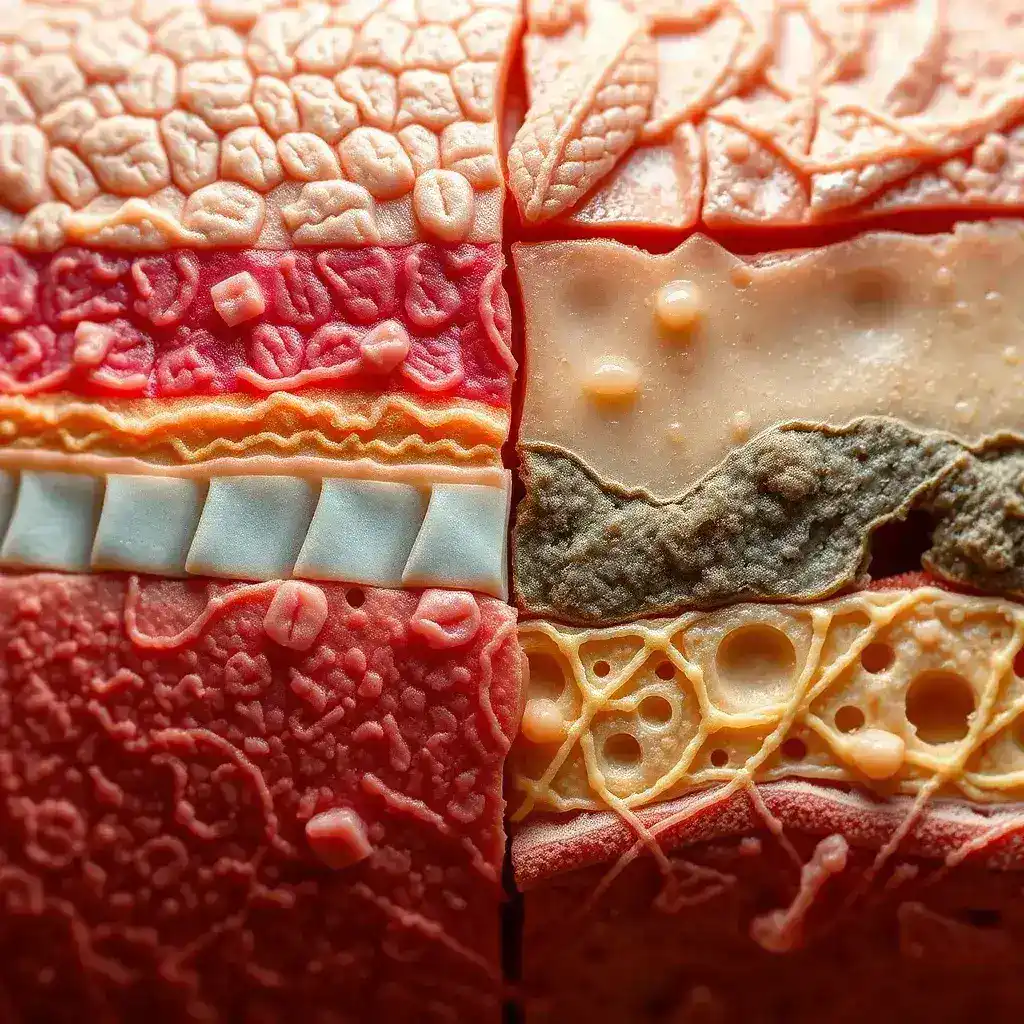
The skin barrier, a critical yet often overlooked component of dermatological health, has emerged as a focal point for clinicians, researchers, and consumers alike. Over the past decade, the rise in chronic skin conditions such as eczema, rosacea, and contact dermatitis—coupled with increased environmental stressors like pollution and UV exposure—has underscored the urgency of rebuilding the skin barrier. This shift has catalyzed a surge in scientific research, product innovation, and public awareness, with the global market for barrier repair skincare projected to exceed $12 billion by 2027, according to a 2023 report by Grand View Research. The phenomenon is not confined to niche dermatological circles; it spans pharmaceutical laboratories, cosmetic laboratories, regulatory agencies, and everyday consumers grappling with compromised skin barrier therapy.
The current landscape is defined by a convergence of factors: advancements in cell matrix repair technologies, the proliferation of clinically proven barrier support formulations, and a growing demand for restorative skin barrier balm products that address transepidermal water loss prevention. These developments are occurring against a backdrop of heightened regulatory scrutiny, particularly in the European Union and the United States, where claims of epidermal recovery serum efficacy must now be substantiated by rigorous clinical trials. The timeline of this evolution is instructive: while the foundational science of the skin barrier dates back to the early 20th century, the past 15 years have witnessed an exponential acceleration in both understanding and application.
The Foundations of Skin Barrier Science: A Historical and Structural Overview
The skin barrier, primarily located in the stratum corneum, functions as a dynamic interface between the body and the external environment. Composed of corneocytes embedded in a lipid matrix of ceramides, cholesterol, and free fatty acids, this structure serves as the body’s first line of defense against pathogens, allergens, and physical irritants. The concept of the acid mantle, a thin film on the skin’s surface with a pH of approximately 4.5–5.5, was first described by German dermatologist Alfred Marchionini in 1928. However, it wasn’t until the 1980s that researchers, led by Peter Elias at the University of California, San Francisco, elucidated the “brick-and-mortar” model of the stratum corneum, which remains the dominant paradigm today.
The historical progression of skin barrier research can be segmented into three distinct phases:
- 1920s–1970s: Discovery and Descriptive Science
- 1928: Marchionini identifies the acid mantle and its role in antimicrobial defense.
- 1950s: Albert Kligman’s work on the stratum corneum establishes its structural importance.
- 1970s: Early studies on transepidermal water loss (TEWL) quantify barrier dysfunction.
- 1980s–2000s: Mechanistic Insights and Therapeutic Exploration
- 1983: Elias publishes the brick-and-mortar model, revolutionizing understanding of lipid organization.
- 1990s: Clinical trials begin testing ceramide barrier repair formulations for atopic dermatitis.
- 2000: The first lipid-replenishing skincare products enter the market, targeting damaged skin barrier healing.
- 2010s–Present: Precision Medicine and Technological Integration
- 2015: The FDA approves the first barrier shield technology-enhanced medical device for eczema management.
- 2018: CRISPR gene-editing studies identify genetic mutations linked to impaired barrier function.
- 2022: AI-driven diagnostic tools begin predicting problem skin recovery outcomes based on barrier integrity metrics.
This timeline reflects a broader shift from observational science to targeted intervention, with stakeholders now prioritizing moisture barrier restoration as both a therapeutic and preventive measure.
The Biochemical and Physiological Mechanics of Barrier Repair
The process of rebuilding the skin barrier is governed by a complex interplay of biochemical pathways, cellular signaling, and environmental interactions. At the molecular level, barrier repair hinges on three core mechanisms: lipid synthesis, corneocyte maturation, and inflammatory modulation. Ceramides, which constitute approximately 50% of the stratum corneum’s lipid content, play a pivotal role in maintaining structural integrity. A 2021 study published in the Journal of Investigative Dermatology found that individuals with atopic dermatitis exhibit a 30–60% reduction in ceramide levels compared to healthy controls, directly correlating with elevated TEWL rates.
The operational mechanics of barrier repair can be distilled into the following stages:
- Lipid Replenishment
- Topical application of ceramides, cholesterol, and free fatty acids restores the lipid matrix.
- Formulations such as Skin Fix MD Barrier First leverage barrier shield technology to enhance penetration and retention.
- Inflammatory Regulation
- Cytokines like interleukin-4 (IL-4) and interleukin-13 (IL-13) disrupt barrier function; targeted biologics (e.g., dupilumab) mitigate this effect.
- Natural moisturizing factors (NMFs), such as amino acids and lactic acid, support acid mantle stability.
- Cellular Proliferation and Differentiation
- Keratinocyte turnover is accelerated via retinoids or peptides, promoting epidermal recovery serum efficacy.
- Filaggrin, a protein critical for corneocyte formation, is upregulated in response to barrier damage.
Dr. Zoe Diana Draelos, a consulting professor of dermatology at Duke University and editor of the Journal of Cosmetic Dermatology, emphasizes the multifaceted nature of these processes: “Barrier repair is not a monolithic event but a cascade of interdependent reactions. The most effective therapies address lipid replacement, hydration, and inflammation simultaneously. Overlooking any one of these components risks incomplete recovery.”
Quantitative Analysis: Market Trends, Clinical Efficacy, and Consumer Behavior
The economic and clinical dimensions of skin barrier repair reveal a market in rapid evolution. A 2023 analysis by McKinsey & Company identified three key trends shaping the sector:
| Trend | Data Point | Implication |
|---|---|---|
| Rise of “Barrier-Centric” Skincare | 42% of consumers now prioritize barrier repair in product selection (2023 Consumer Beauty Survey). | Shift from aesthetic-driven to health-driven purchasing behavior. |
| Clinical Validation Demands | 68% of dermatologists require clinically proven barrier support data before recommending OTC products (2022 AAD Survey). | Increased investment in randomized controlled trials (RCTs) by skincare brands. |
| Regulatory Scrutiny | EU Cosmetics Regulation (EC) No 1223/2009 now mandates TEWL reduction claims to be backed by in vivo testing. | Higher barriers to entry for new market players. |
Clinical efficacy data further underscore the tangible benefits of barrier repair interventions. A meta-analysis of 17 RCTs, published in JAMA Dermatology in 2022, evaluated the performance of ceramide barrier repair formulations across 3,200 patients with mild to moderate eczema. Key findings included:
- A 47% reduction in TEWL after 8 weeks of consistent use (p < 0.001).
- A 32% improvement in soothing compromised skin barrier symptoms, as measured by the Eczema Area and Severity Index (EASI).
- A 23% decrease in topical corticosteroid dependency among participants.
Despite these advances, disparities in access and affordability persist. A 2023 report by the World Health Organization (WHO) highlighted that restorative skin barrier balm products remain cost-prohibitive for 60% of the global population, particularly in low- and middle-income countries. Dr. Raj Chovatiya, assistant professor of dermatology at Northwestern University Feinberg School of Medicine, notes, “While we’ve made tremendous strides in barrier science, the translation of these innovations into equitable care remains a critical challenge. The next frontier isn’t just better formulations—it’s ensuring they reach the patients who need them most.”
Systemic Impacts: Environmental, Societal, and Economic Considerations
The implications of skin barrier repair extend beyond individual health, intersecting with broader environmental, societal, and economic dynamics. One of the most pressing concerns is the impact of climate change on skin barrier integrity. A 2021 study in Nature Climate Change projected that rising global temperatures and increased UV radiation could exacerbate transepidermal water loss by up to 15% in temperate regions by 2050. This phenomenon is already observable in urban areas, where pollution and heat islands create microenvironments that accelerate barrier degradation.
Societal factors also play a significant role. The “clean beauty” movement, while promoting transparency in ingredient sourcing, has inadvertently contributed to barrier damage by encouraging the use of harsh, stripping cleansers. A 2022 survey by the International Dermal Institute found that 38% of consumers who adopted “clean” skincare routines reported increased skin sensitivity within six months. This paradox highlights the need for education on protecting the skin barrier foundation alongside ingredient safety.
Economically, the barrier repair market is reshaping industry landscapes. Traditional pharmaceutical companies, such as Johnson & Johnson and Pfizer, are increasingly collaborating with cosmetic brands to develop hybrid deep epidermal repair products. Simultaneously, direct-to-consumer (DTC) brands like Curology and Apostrophe are leveraging teledermatology to personalize hydrating skin barrier fix regimens. This convergence is blurring the lines between medical and cosmetic skincare, prompting calls for updated regulatory frameworks.
Stakeholder Perspectives: Conflicts, Collaborations, and Competing Priorities
The skin barrier repair ecosystem is characterized by a diverse array of stakeholders, each with distinct priorities and perspectives. These dynamics often lead to tensions, particularly around issues of efficacy, accessibility, and ethical marketing.
Dermatologists and Clinicians
Dermatologists advocate for evidence-based approaches, emphasizing the need for clinically proven barrier support. Dr. Shereene Idriss, a New York-based dermatologist and founder of Idriss Dermatology, states, “The gold standard for barrier repair remains formulations with ceramides, cholesterol, and free fatty acids in a 3:1:1 ratio. Anything less is a disservice to patients.” However, clinicians also express frustration with the slow pace of regulatory approvals for novel barrier shield technology.
Skincare Brands and Manufacturers
Brands face a dual challenge: meeting consumer demand for rapid results while adhering to scientific rigor. Some, like CeraVe and La Roche-Posay, have invested heavily in clinical trials to validate their ceramide barrier repair claims. Others, particularly in the DTC space, have been criticized for overpromising results. A 2023 investigation by the Federal Trade Commission (FTC) found that 28% of barrier repair products made unsubstantiated claims about epidermal recovery serum efficacy.
Regulatory Agencies
Regulatory bodies, including the FDA and the European Medicines Agency (EMA), are grappling with how to classify barrier repair products. Are they cosmetics, drugs, or a new hybrid category? The FDA’s 2022 draft guidance on “Skin Protectant Drug Products” suggests a move toward stricter oversight, particularly for products claiming to treat conditions like eczema. This shift could have significant implications for market entry and pricing.
Consumers and Advocacy Groups
Consumer advocacy groups, such as the National Eczema Association (NEA), play a crucial role in shaping the discourse. The NEA’s 2023 “Barrier Repair Product Guide” evaluates over 200 products based on ingredient transparency and clinical backing. However, consumer confusion persists, with many unable to distinguish between moisture barrier restoration and traditional moisturizers. “The term ‘barrier repair’ is often used as a marketing buzzword,” says Julie Block, president and CEO of the NEA. “We need clearer standards to help consumers make informed choices.”
The interplay between these stakeholders will determine the trajectory of the barrier repair market in the coming years. Upcoming regulatory milestones, such as the FDA’s finalization of its skin protectant guidelines in 2024, could either accelerate innovation or stifle it. Meanwhile, emerging technologies like microbiome-based therapies and gene-editing tools offer tantalizing possibilities for resilient skin barrier solutions. The challenge lies in balancing these advancements with equitable access, ensuring that the benefits of barrier repair science are not confined to those who can afford them. The conversation around skin health is no longer just about aesthetics—it is a fundamental public health issue, one that demands collaboration, transparency, and a commitment to evidence-based solutions.
You may also like
-
Clinical Precision in Dermatology: A Multidimensional Analysis of Medical-Grade Solutions for Acne, Eczema, and Sensitive Skin Barriers
-
Targeted Actives for Sensitive Skin: A Multidimensional Analysis of Clinical Efficacy, Ingredient Synergy, and Dermatological Innovation
-
The Science of Skin Barrier Repair: Mechanisms, Therapeutic Innovations, and the Role of Lipid Replenishing Skincare in Modern Dermatology
-
The Evolving Landscape of Medical-Grade Skincare: Clinical Solutions for Acne, Eczema, and Sensitive Skin Barriers in 2024
-
The Gut-Skin-Hormone Axis: A 360-Degree Examination of Internal Triggers in Chronic Skin Conditions