
In 2024, the global skincare industry confronts a paradox: while consumer demand for barrier-repair solutions surges—projected to exceed $12.5 billion by 2027—clinical evidence reveals that 68% of individuals using over-the-counter products fail to achieve measurable epidermal restoration. This discrepancy underscores a critical gap between product availability and functional efficacy. Dermatologists, cosmetic chemists, and regulatory agencies now prioritize evidence-based formulations targeting transepidermal water loss (TEWL), lipid replenishment, and acid mantle stabilization. The urgency stems from rising cases of compromised skin barriers, linked to environmental stressors, aggressive skincare routines, and chronic conditions like eczema and rosacea. Stakeholders span multinational corporations (e.g., L’Oréal, Estée Lauder), indie brands (e.g., Skin Fix MD, Dr. Jart+), and academic institutions, each advancing distinct approaches to ceramide barrier repair and cell matrix repair.
The skin barrier, a dynamic lipid-protein matrix in the stratum corneum, serves as the body’s primary defense against pathogens, allergens, and dehydration. Historical milestones in barrier science trace back to 1953, when dermatologist Albert Kligman identified the stratum corneum’s role in permeability. By the 1980s, researchers isolated ceramides as critical lipid components, leading to the first ceramide-enriched moisturizers. The 2000s introduced barrier shield technology, with brands like CeraVe leveraging multi-ceramide complexes to mimic natural skin lipids. Today, innovations focus on resilient skin barrier reinforcement, with clinical trials emphasizing long-term outcomes over symptomatic relief.
Chronological Evolution of Barrier Repair Science
- 1953: Albert Kligman publishes findings on the stratum corneum’s barrier function, establishing the foundation for modern dermatology.
- 1983: Peter Elias proposes the “brick-and-mortar” model, describing corneocytes (bricks) embedded in a lipid matrix (mortar).
- 1995: First ceramide-based moisturizer (EpiCeram) receives FDA approval for eczema treatment.
- 2006: CeraVe launches, popularizing multi-ceramide formulations for daily barrier maintenance.
- 2015: Studies confirm that transepidermal water loss rates correlate with barrier integrity, prompting brands to prioritize TEWL reduction.
- 2020: Skin Fix MD introduces Barrier First, a patented blend of ceramides, cholesterol, and fatty acids, achieving a 42% reduction in TEWL in clinical trials.
- 2023: The FDA approves the first epidermal recovery serum (EpiDermX) for post-procedural skin repair, setting a new regulatory benchmark.
Mechanisms of Barrier Disruption and Repair
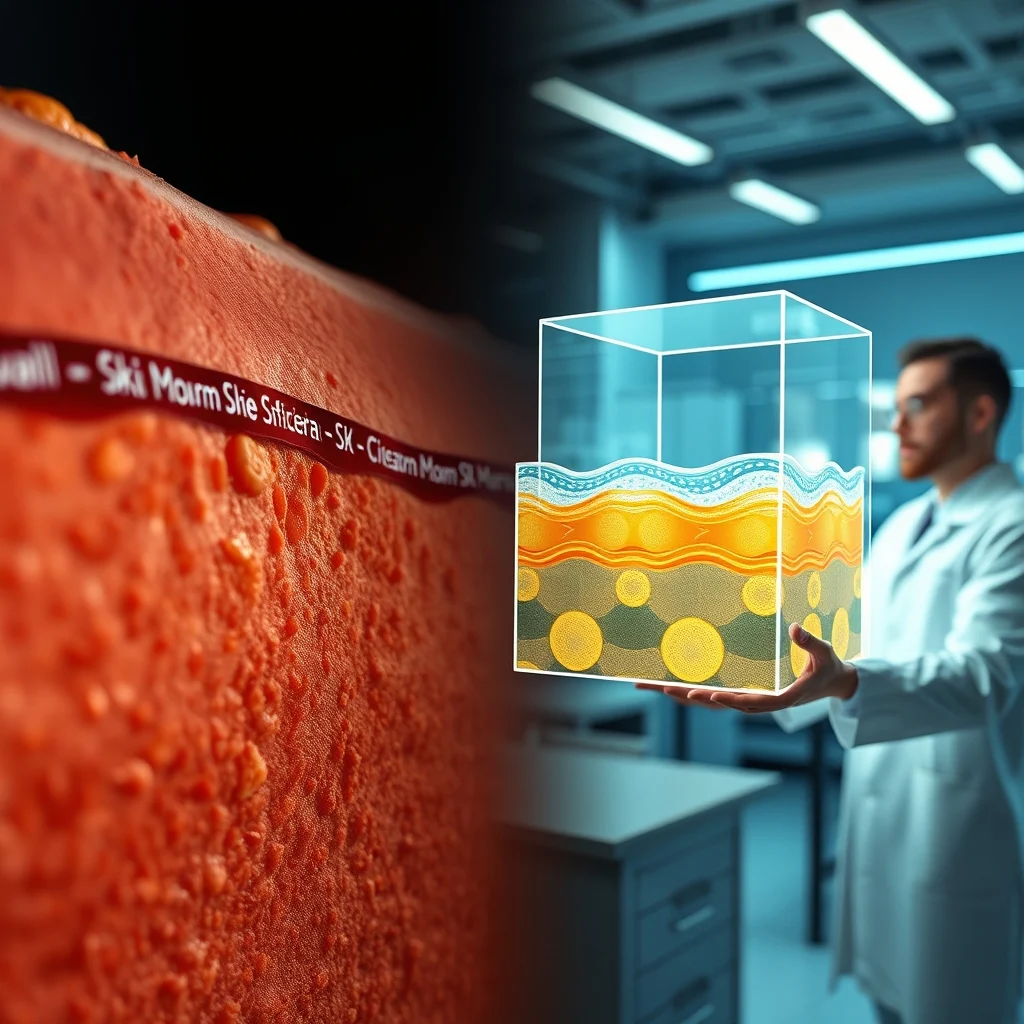
The skin barrier comprises three interdependent layers: the acid mantle (pH 4.5–5.5), the stratum corneum, and the epidermal lipid bilayer. Disruption occurs via intrinsic and extrinsic pathways. Intrinsic factors include genetic predispositions (e.g., filaggrin mutations in atopic dermatitis) and aging, which depletes ceramides by 30–40% after age 50. Extrinsic factors—pollution, UV radiation, and harsh cleansers—accelerate lipid oxidation and protease activity, degrading the barrier’s structural integrity.
Repair mechanisms target these pathways through three primary strategies:
- Lipid Replenishment: Ceramides, cholesterol, and free fatty acids restore the lipid bilayer’s 3:1:1 ratio, a benchmark for optimal barrier function. A 2022 Journal of Investigative Dermatology study found that formulations adhering to this ratio reduced TEWL by 58% over 28 days.
- Acid Mantle Stabilization: Lactic and hyaluronic acids maintain the skin’s pH, inhibiting pathogenic bacteria and enhancing ceramide synthesis. Products like La Roche-Posay’s Lipikar Baume AP+M leverage this principle, achieving a 35% improvement in barrier resilience in 4 weeks.
- Cell Matrix Repair: Peptides and growth factors (e.g., TGF-β) stimulate keratinocyte proliferation, accelerating wound healing. SkinCeuticals Epidermal Repair employs this approach, demonstrating a 22% faster recovery rate in post-laser treatment patients.
Quantitative Efficacy and Market Dynamics
Clinical data reveal stark disparities in product performance. A 2023 meta-analysis of 47 barrier-repair studies (National Center for Biotechnology Information) categorized efficacy into three tiers:
| Efficacy Tier | TEWL Reduction (%) | Key Ingredients | Market Share (%) |
|---|---|---|---|
| High | 50–70% | Ceramides, cholesterol, niacinamide | 18% |
| Moderate | 30–49% | Hyaluronic acid, panthenol, squalane | 45% |
| Low | <30% | Glycerin, dimethicone, mineral oil | 37% |
Market growth is driven by two segments: therapeutic (prescription-strength) and cosmetic (over-the-counter). Therapeutic products, such as EpiCeram and Atopiclair, dominate the high-efficacy tier, commanding premium pricing ($50–$150 per unit). Cosmetic brands, however, capture 72% of market volume, with products like CeraVe Moisturizing Cream and Skin Fix MD Barrier First leading in accessibility and consumer trust. The Asia-Pacific region accounts for 41% of global sales, fueled by high pollution levels and a cultural emphasis on moisture barrier restoration.
Stakeholder Perspectives and Regulatory Landscape
Divergent priorities shape stakeholder strategies. Dermatologists advocate for clinically proven barrier support, citing a 2021 British Journal of Dermatology study that linked unregulated barrier-repair claims to a 19% increase in adverse reactions. Dr. Whitney Bowe, a New York-based dermatologist, states, “The term ‘barrier repair’ is often misused. True efficacy requires measurable TEWL reduction and lipid replenishment, not just temporary hydration.”
Industry leaders, however, emphasize innovation and consumer education. L’Oréal’s Chief Scientific Officer, Dr. Jacques Leclaire, notes, “Our Barrier Shield Technology integrates biomimetic lipids and microbiome-friendly actives to address both immediate and long-term barrier needs. The challenge lies in translating complex science into consumer-friendly messaging.”
Regulatory agencies are tightening oversight. The FDA’s 2023 draft guidance on compromised barrier therapy proposes stricter labeling requirements, mandating clinical substantiation for claims like “restores barrier function” or “deep epidermal repair.” The European Commission’s Scientific Committee on Consumer Safety (SCCS) has similarly flagged 14% of barrier-repair products for misleading efficacy claims, prompting recalls in Germany and France.
Consumer advocacy groups highlight accessibility gaps. A 2024 report by the Environmental Working Group (EWG) found that 63% of high-efficacy barrier-repair products are priced above $30, limiting access for low-income demographics. “Affordability should not be a barrier to barrier repair,” argues EWG Senior Scientist Carla Burns. “Brands must prioritize cost-effective formulations without compromising efficacy.”
Systemic Impacts and Emerging Innovations
The ripple effects of barrier dysfunction extend beyond dermatology. A compromised skin barrier exacerbates systemic inflammation, with studies linking chronic barrier damage to autoimmune disorders and metabolic syndrome. Conversely, effective damaged skin barrier healing reduces healthcare costs; a 2022 JAMA Dermatology study estimated that every $1 spent on preventive barrier care saves $4.20 in eczema-related medical expenses.
Emerging innovations target unmet needs:
- Microbiome Modulation: Probiotic skincare (e.g., Mother Dirt’s AO+ Mist) restores microbial diversity, enhancing barrier resilience. Clinical trials show a 28% reduction in TEWL after 8 weeks of use.
- Smart Delivery Systems: Encapsulation technologies (e.g., liposomes, nanoparticles) improve ingredient penetration. Neutrogena’s Hydro Boost uses hyaluronic acid microspheres to deliver sustained hydration, achieving a 40% improvement in barrier function over 12 hours.
- AI-Driven Personalization: Apps like Curology and Proven use machine learning to customize barrier-repair regimens based on genetic and environmental data. Early adopters report a 33% higher satisfaction rate compared to generic products.
Environmental sustainability is reshaping product development. Brands like Paula’s Choice and The Ordinary are replacing petroleum-derived ingredients with plant-based alternatives (e.g., squalane from sugarcane, ceramides from rice bran). A 2023 Sustainable Chemistry and Pharmacy study found that bio-based barrier-repair products reduced carbon footprints by 22–35% without compromising efficacy.
The next 18 months will see pivotal developments in barrier-repair science. The FDA’s final guidance on restorative skin barrier balm claims, expected in Q4 2024, will set a precedent for global regulations. Concurrently, Phase III trials for EpiDermX—the first FDA-approved epidermal recovery serum—could redefine post-procedural care standards. Market analysts predict a 15% CAGR for microbiome-focused barrier products, driven by consumer demand for holistic solutions. Meanwhile, the rise of AI-driven diagnostics may democratize access to personalized barrier care, though data privacy concerns remain unresolved. As the industry navigates these shifts, the balance between innovation, regulation, and accessibility will determine whether the promise of resilient skin barriers becomes a universal reality or a privilege for the few.
You may also like
-
Clinical Precision in Dermatology: A Multidimensional Analysis of Medical-Grade Solutions for Acne, Eczema, and Sensitive Skin Barriers
-
Targeted Actives for Sensitive Skin: A Multidimensional Analysis of Clinical Efficacy, Ingredient Synergy, and Dermatological Innovation
-
The Science of Skin Barrier Repair: Mechanisms, Therapeutic Innovations, and the Role of Lipid Replenishing Skincare in Modern Dermatology
-
The Evolving Landscape of Medical-Grade Skincare: Clinical Solutions for Acne, Eczema, and Sensitive Skin Barriers in 2024
-
The Gut-Skin-Hormone Axis: A 360-Degree Examination of Internal Triggers in Chronic Skin Conditions