
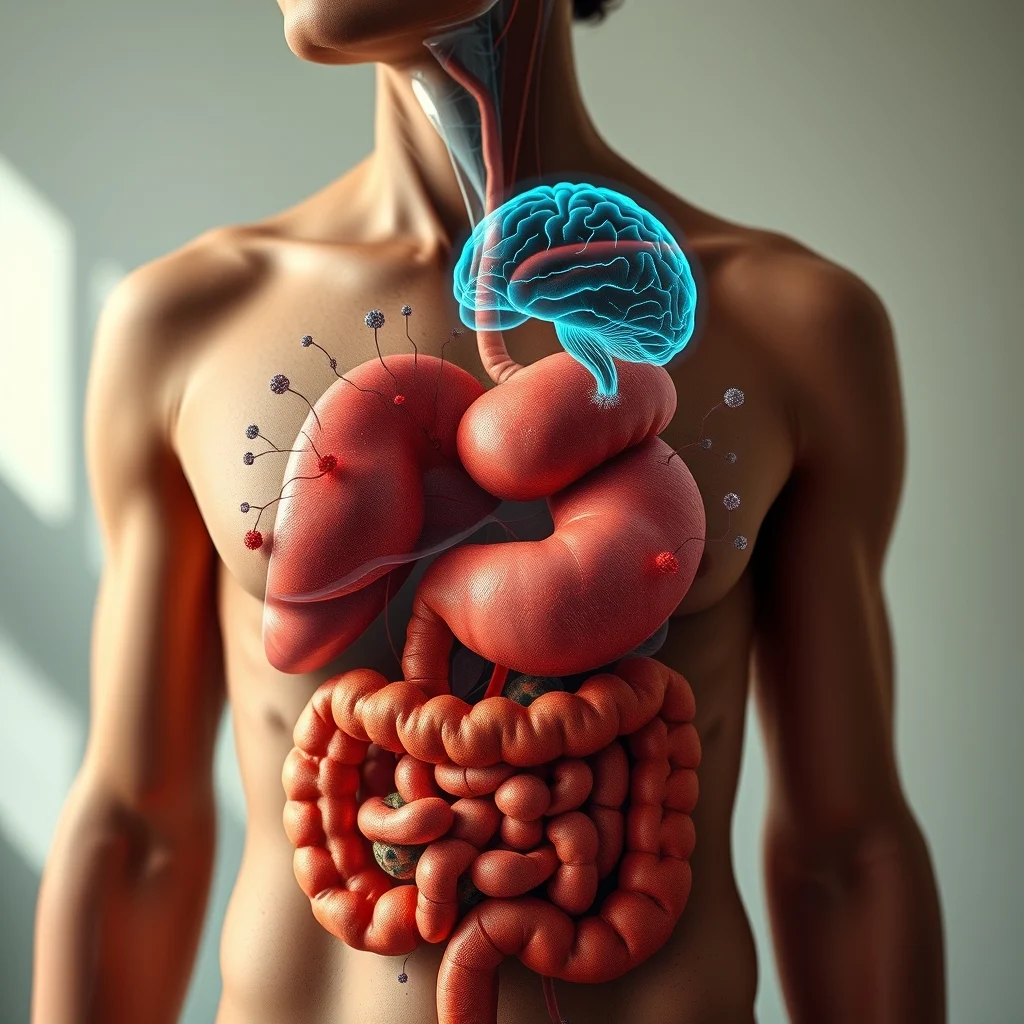
Dermatologists and nutritionists increasingly confirm what ancient healing traditions long suspected: skin health extends far beyond topical treatments. A growing body of research reveals that gut imbalances, hormonal fluctuations, and chronic stress directly influence acne, eczema, rosacea, and premature aging. This convergence of internal and external factors demands a 360-degree approach to skincare, one that integrates medical dermatology, nutritional science, and stress management. The phenomenon affects millions globally, with studies showing that 40% to 55% of adults over 25 experience persistent acne, often linked to internal triggers rather than surface-level causes. The trend has accelerated since the early 2010s, coinciding with rising stress levels, processed food consumption, and endocrine-disrupting chemicals in the environment.
The Interconnected Systems: Defining the Scope
The skin is not an isolated organ but a dynamic interface regulated by the brain-gut-skin axis, a bidirectional communication network involving the central nervous system, gastrointestinal tract, and integumentary system. This axis explains why digestive disorders like irritable bowel syndrome (IBS) and small intestinal bacterial overgrowth (SIBO) frequently coincide with inflammatory skin conditions. Historical records trace the concept to Hippocrates, who observed that “all disease begins in the gut.” Modern dermatology formalized the connection in the 1930s when dermatologists John H. Stokes and Donald M. Pillsbury proposed that emotional states could alter gut microbiota, leading to skin inflammation. Today, the primary stakeholders include dermatologists, gastroenterologists, endocrinologists, nutritionists, mental health professionals, and patients navigating chronic skin conditions. The skincare industry has responded with probiotic supplements, hormone-balancing topicals, and stress-relief skincare lines, though regulatory oversight remains fragmented.
Chronological Evolution of the Brain-Gut-Skin Axis
- 1930s: Stokes and Pillsbury publish findings linking emotional stress to gut permeability and acne vulgaris.
- 1960s: Researchers identify cortisol as a key mediator between stress and skin inflammation, though mechanisms remain poorly understood.
- 1990s: The Human Genome Project catalyzes microbiome research, revealing the gut’s role in immune regulation and systemic inflammation.
- 2008: A landmark study in Gut Pathogens demonstrates that Lactobacillus strains reduce acne lesions by modulating sebum production.
- 2016: The American Academy of Dermatology (AAD) acknowledges the gut-skin connection in clinical guidelines, recommending dietary modifications for acne management.
- 2020: The COVID-19 pandemic triggers a 25% surge in stress-related skin flare-ups, prompting dermatologists to prioritize psychodermatology in treatment protocols.
- 2023: A meta-analysis in JAMA Dermatology confirms that high-glycemic diets increase acne risk by 32% compared to low-glycemic diets, solidifying the diet-acne connection.
Operational Mechanics: How Internal Triggers Manifest on Skin
The brain-gut-skin axis operates through three primary pathways: neuroendocrine, immune, and microbial. Stress activates the hypothalamic-pituitary-adrenal (HPA) axis, releasing cortisol, which disrupts the skin barrier, increases sebum production, and triggers inflammatory cytokines like interleukin-1 (IL-1) and tumor necrosis factor-alpha (TNF-α). Concurrently, gut dysbiosis—an imbalance in microbial communities—compromises intestinal permeability, allowing bacterial endotoxins to enter the bloodstream. These endotoxins, known as lipopolysaccharides (LPS), exacerbate systemic inflammation, which manifests as redness, pustules, or eczematous rashes on the skin.
Hormonal fluctuations further complicate the equation. Androgens like testosterone stimulate sebaceous glands, leading to clogged pores and cystic acne, particularly along the jawline, chin, and lower cheeks—a pattern dermatologists refer to as “hormonal face mapping.” Estrogen dominance or deficiency, common in polycystic ovary syndrome (PCOS) or menopause, can cause dryness, thinning, or melasma. “The skin is a mirror of internal health,” explains Dr. Whitney Bowe, a board-certified dermatologist and author of The Beauty of Dirty Skin. “When patients present with persistent acne or rosacea, we now screen for gut health markers like zonulin, a protein that regulates intestinal permeability, and cortisol levels.”
Quantitative Data: Measuring the Impact
| Factor | Effect on Skin | Statistical Evidence |
|---|---|---|
| High-glycemic diet | Increases acne severity by 32-51% | 2023 JAMA Dermatology meta-analysis (n=1,500) |
| Chronic stress (cortisol >25 µg/dL) | Delays wound healing by 40%, worsens psoriasis by 30% | 2021 Psychoneuroendocrinology study (n=800) |
| Gut dysbiosis | Associated with 2.5x higher risk of atopic dermatitis | 2020 Nature Communications cohort study (n=10,000) |
| Hormonal imbalance (PCOS) | 70% of patients develop acne; 30% develop hirsutism | 2019 Journal of Clinical Endocrinology & Metabolism (n=1,200) |
Data from the National Institutes of Health (NIH) further illustrates the economic burden: inflammatory skin diseases cost the U.S. healthcare system $75 billion annually, with indirect costs like lost productivity adding another $11 billion. A 2022 report by the Global Wellness Institute highlights that consumers spent $1.5 billion on probiotic skincare products alone, a 40% increase from 2019. Despite this growth, clinical evidence remains mixed. A 2023 systematic review in Dermatologic Therapy found that while 68% of studies reported benefits from probiotic supplementation for acne, 32% showed no significant improvement, underscoring the need for personalized approaches.
Systemic Impacts: Beyond the Surface
The implications of the brain-gut-skin axis extend beyond aesthetics. Chronic skin inflammation is linked to an increased risk of autoimmune diseases, including lupus and rheumatoid arthritis. A 2021 study in The Lancet Rheumatology found that patients with psoriasis had a 25% higher likelihood of developing psoriatic arthritis within five years. Similarly, gut dysbiosis has been associated with depression and anxiety, creating a feedback loop where mental health and skin health deteriorate in tandem. “The skin and the brain share a common embryonic origin,” notes Dr. Amy Wechsler, a dual-board-certified dermatologist and psychiatrist. “When we treat skin conditions, we must address the psychological component. Cognitive behavioral therapy (CBT) has been shown to reduce acne severity by 50% in some patients.”
Environmental factors further complicate the picture. Urbanization, pollution, and endocrine-disrupting chemicals (EDCs) in plastics and cosmetics exacerbate hormonal imbalances. A 2022 study in Environmental Health Perspectives found that exposure to phthalates—common in fragrances and packaging—increased acne risk by 22% in adolescents. The study also noted that women with higher urinary concentrations of bisphenol A (BPA) were 30% more likely to develop adult-onset acne. These findings have prompted calls for stricter regulations on EDCs, though progress remains slow. The European Union’s REACH program has banned several EDCs, but the U.S. Environmental Protection Agency (EPA) has yet to implement comparable restrictions.
Stakeholder Perspectives: Competing Priorities
Dermatologists advocate for a holistic approach, integrating topical treatments with dietary and lifestyle modifications. “We’ve moved beyond the era of treating skin in isolation,” says Dr. Rajani Katta, a clinical professor of dermatology at Baylor College of Medicine. “A patient with rosacea might benefit from a low-histamine diet, stress reduction techniques, and a topical anti-inflammatory, but insurance companies often don’t cover nutritional counseling.” This gap in coverage frustrates patients, 60% of whom report out-of-pocket spending on supplements and alternative therapies, according to a 2023 survey by the AAD.
The skincare industry, meanwhile, capitalizes on the trend with products like “gut-friendly” serums and “hormone-balancing” moisturizers. However, critics argue that many brands engage in “greenwashing,” making unsubstantiated claims about probiotic or adaptogenic ingredients. “The term ‘probiotic skincare’ is often a marketing gimmick,” cautions Dr. Jennifer Chwalek, a dermatologist at Union Square Laser Dermatology. “Most topical probiotics don’t survive long enough to colonize the skin, and oral probiotics may not translate to skin benefits.” The U.S. Food and Drug Administration (FDA) has issued warning letters to several companies for making unproven claims, but enforcement remains inconsistent.
Patients, particularly those with chronic conditions like eczema or psoriasis, express frustration with the trial-and-error nature of treatment. “I’ve tried everything—antibiotics, steroids, elimination diets,” says Sarah Chen, a 32-year-old with hormonal acne. “It’s exhausting to navigate conflicting advice from dermatologists, nutritionists, and online forums.” Support groups and telemedicine platforms have emerged to fill the gap, offering personalized plans that combine dermatology, nutrition, and mental health support. A 2023 study in JMIR Dermatology found that patients using such platforms reported a 40% improvement in skin symptoms and a 30% reduction in stress levels.
Regulatory bodies are beginning to take notice. The FDA’s 2023 draft guidance on probiotic supplements acknowledges the need for standardized testing to verify claims, though final rules are not expected until 2025. In the meantime, researchers continue to explore novel interventions, such as fecal microbiota transplantation (FMT) for acne and phage therapy to target acne-causing bacteria. A 2024 clinical trial at the University of California, San Diego, is investigating whether FMT can reduce acne severity by 50% over six months, with preliminary results expected by late 2024. As the science evolves, the challenge lies in translating complex research into accessible, evidence-based solutions for patients navigating the interplay of gut health, hormones, and stress.
The convergence of dermatology, gastroenterology, and endocrinology marks a paradigm shift in how skin health is understood and treated. While the brain-gut-skin axis offers a promising framework for addressing chronic skin conditions, its practical application remains uneven. Patients, practitioners, and policymakers must navigate a landscape where scientific advancements outpace regulatory oversight and insurance coverage. The next decade will likely see further integration of these disciplines, driven by consumer demand and emerging research. However, the pace of change will depend on bridging gaps between clinical evidence, industry practices, and healthcare accessibility, ensuring that the promise of holistic skincare becomes a reality for all.
You may also like
-
Clinical Precision in Dermatology: A Multidimensional Analysis of Medical-Grade Solutions for Acne, Eczema, and Sensitive Skin Barriers
-
Targeted Actives for Sensitive Skin: A Multidimensional Analysis of Clinical Efficacy, Ingredient Synergy, and Dermatological Innovation
-
The Science of Skin Barrier Repair: Mechanisms, Therapeutic Innovations, and the Role of Lipid Replenishing Skincare in Modern Dermatology
-
The Evolving Landscape of Medical-Grade Skincare: Clinical Solutions for Acne, Eczema, and Sensitive Skin Barriers in 2024
-
The Gut-Skin-Hormone Axis: A 360-Degree Examination of Internal Triggers in Chronic Skin Conditions