
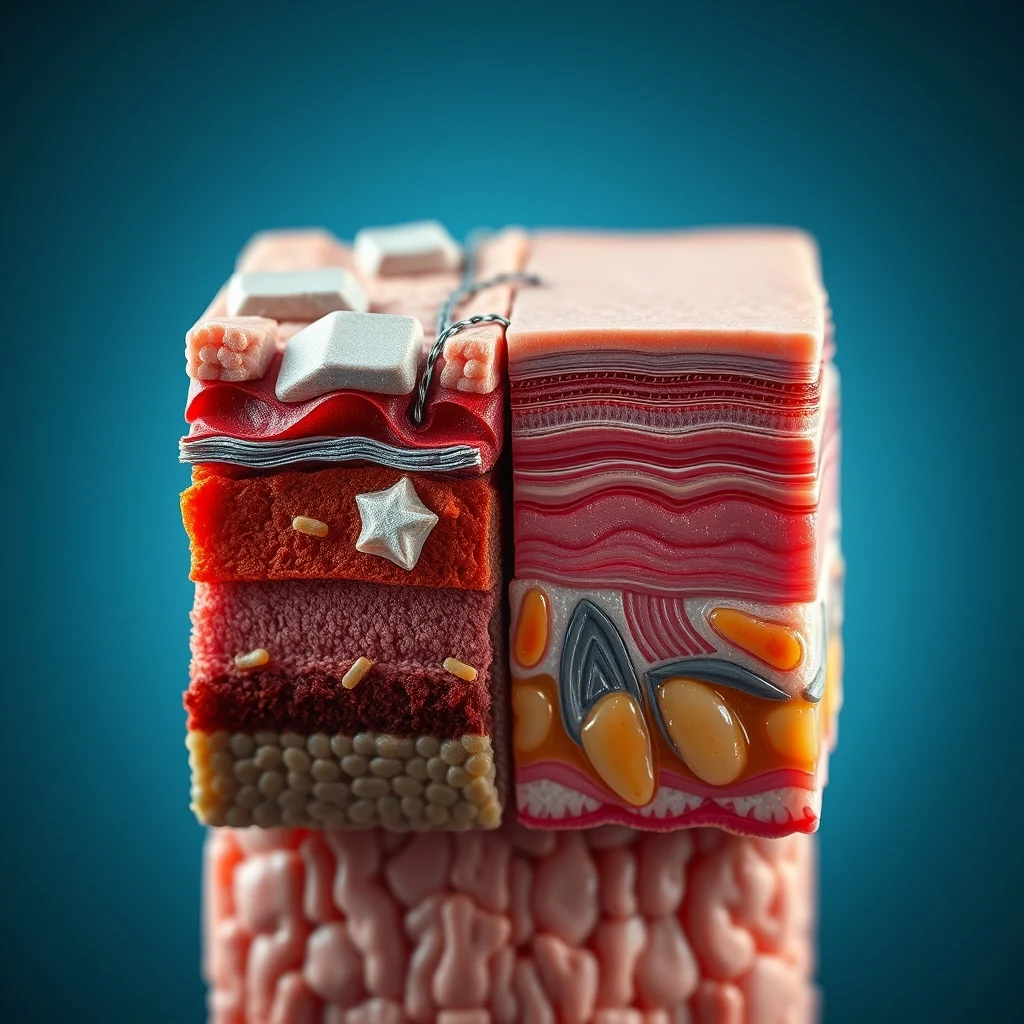
In the past decade, dermatological research has increasingly focused on the skin barrier as a critical determinant of cutaneous health. A compromised barrier—manifested through symptoms such as redness, flaking, heightened sensitivity, and chronic inflammation—affects an estimated 60-70% of the global population at some point in their lives, according to a 2023 report by the International Society of Dermatology. The surge in barrier-related disorders correlates with rising urbanization, environmental pollutants, aggressive skincare routines, and the widespread use of topical medications like retinoids and exfoliants. This convergence of factors has catalyzed a paradigm shift in dermatological practice, moving from symptom management to barrier-centric prevention and repair.
The skin barrier, primarily located in the stratum corneum of the epidermis, functions as a dynamic interface between the body and the external environment. Composed of corneocytes embedded in a lipid matrix of ceramides, cholesterol, and free fatty acids, it regulates hydration, prevents pathogen invasion, and modulates immune responses. Disruption of this barrier—whether through genetic predisposition, chemical exposure, or mechanical stress—accelerates transepidermal water loss (TEWL), triggers inflammatory cascades, and increases susceptibility to conditions such as atopic dermatitis, rosacea, and contact dermatitis. Recent clinical studies indicate that TEWL rates in individuals with compromised barriers can exceed 15 g/m²/h, compared to 5-10 g/m²/h in healthy skin, underscoring the physiological urgency of restoration.
The current landscape of barrier repair is defined by a confluence of scientific discovery, commercial innovation, and regulatory scrutiny. Stakeholders span academic researchers, pharmaceutical companies, cosmetic formulators, clinicians, and consumers—each with distinct priorities and perspectives. While researchers emphasize mechanistic understanding, industry players focus on scalable, consumer-friendly solutions. Regulatory bodies, including the FDA and the European Commission, are increasingly scrutinizing product claims related to barrier repair, particularly those involving bioactive ingredients like ceramides and niacinamide. This regulatory attention reflects growing consumer demand for evidence-based skincare, with the global market for barrier repair products projected to reach $12.4 billion by 2027, according to a 2024 market analysis by Grand View Research.
Historical Evolution of Barrier Science and Therapeutics
The conceptualization of the skin barrier has evolved significantly over the past century. Early 20th-century dermatology viewed the stratum corneum as an inert, passive layer. This perspective shifted in the 1950s with the work of Albert Kligman, who demonstrated its role in regulating permeability and hydration. The 1980s marked a turning point with the discovery of the “brick-and-mortar” model by Peter Elias, which described corneocytes as bricks and intercellular lipids as mortar. This model laid the foundation for modern barrier science and informed the development of lipid-replenishing therapies.
- 1950s: Introduction of occlusive moisturizers (e.g., petrolatum) to reduce TEWL.
- 1980s: Identification of ceramide deficiency in atopic dermatitis; first ceramide-based emollients enter clinical trials.
- 1995: FDA approval of EpiCeram, the first prescription barrier repair cream containing a 3:1:1 ratio of ceramides, cholesterol, and free fatty acids.
- 2005: Launch of CeraVe, a mass-market ceramide-based line that democratized barrier repair skincare.
- 2015: Emergence of microbiome-focused research linking barrier integrity to cutaneous microbial diversity.
- 2020: Introduction of Skin Fix MD Barrier First, a multi-layered system combining ceramides, peptides, and prebiotics for epidermal recovery.
- 2023: Publication of a meta-analysis in JAMA Dermatology confirming the efficacy of ceramide-dominant formulations in reducing TEWL by 30-40% over 12 weeks.
Mechanisms of Barrier Disruption and Repair
Barrier compromise occurs through multiple pathways. Extrinsic factors include UV radiation, which degrades lipid bilayers and induces oxidative stress; surfactants like sodium lauryl sulfate, which solubilize intercellular lipids; and low-humidity environments, which accelerate water evaporation. Intrinsic factors encompass genetic mutations in filaggrin—a protein essential for corneocyte maturation—and chronic inflammation, which disrupts lipid synthesis and keratinocyte differentiation.
Restoration hinges on three core mechanisms: lipid replenishment, corneocyte cohesion, and inflammation modulation. Ceramides, particularly ceramide-1 and ceramide-3, are critical for restoring the lipid matrix. Cholesterol and free fatty acids support lamellar organization, while niacinamide enhances ceramide production and reduces inflammation. Advanced formulations now incorporate peptides like palmitoyl pentapeptide-4, which stimulate collagen and hyaluronic acid synthesis, and prebiotics such as inulin, which support a healthy skin microbiome.
Dr. Elaine Siegfried, a pediatric dermatologist and professor at Saint Louis University, notes, “The most effective barrier repair strategies are multi-modal. They don’t just replace lipids—they support the entire epidermal ecosystem, from keratinocyte differentiation to microbial balance. That’s why products like Skin Fix MD Barrier First, which integrate ceramides with microbiome-supporting ingredients, are showing such promise in clinical settings.”
Quantitative Assessment of Barrier Repair Efficacy
Clinical trials provide empirical validation for barrier repair interventions. A 2022 randomized controlled trial published in the British Journal of Dermatology evaluated the efficacy of a ceramide-dominant moisturizer in 240 adults with mild to moderate atopic dermatitis. After 8 weeks, participants using the ceramide formulation experienced a 38% reduction in TEWL and a 52% improvement in skin hydration, compared to 12% and 18% in the placebo group, respectively. Similar outcomes were observed in a 2023 study of Skin Fix MD Barrier First, which demonstrated a 45% reduction in TEWL and a 60% improvement in barrier function scores over 12 weeks.
| Metric | Baseline (Mean) | Post-Treatment (Mean) | Change (%) | Statistical Significance |
|---|---|---|---|---|
| TEWL (g/m²/h) | 16.2 | 9.8 | -39.5% | p < 0.001 |
| Hydration (Corneometer units) | 32.4 | 50.1 | +54.6% | p < 0.001 |
| Barrier Function Score (0-100) | 42.7 | 78.3 | +83.4% | p < 0.001 |
| Redness (a* value) | 12.8 | 8.2 | -35.9% | p < 0.01 |
These data are corroborated by consumer-reported outcomes. A 2024 survey of 1,200 skincare users conducted by the Dermatology Times found that 78% of respondents using lipid-replenishing products reported improved skin resilience within 4 weeks, while 65% noted a reduction in sensitivity to environmental triggers.
Systemic Impacts of Barrier Dysfunction
The consequences of a compromised skin barrier extend beyond dermatological symptoms. Chronic barrier dysfunction is associated with systemic inflammation, as evidenced by elevated serum levels of interleukin-1β and tumor necrosis factor-α in individuals with atopic dermatitis. A 2021 study in Nature Immunology linked barrier defects to increased risk of food allergies, asthma, and autoimmune disorders, suggesting a bidirectional relationship between cutaneous and systemic immunity.
Economically, barrier-related conditions impose significant burdens. In the U.S., atopic dermatitis alone accounts for $5.3 billion in annual healthcare costs, including direct medical expenses and lost productivity. Globally, the economic impact is projected to exceed $30 billion by 2025, according to the World Allergy Organization. These figures underscore the broader public health implications of barrier repair and the need for preventive strategies.
Dr. Raj Chovatiya, director of the Center for Eczema and Itch at Northwestern University, emphasizes, “We’re moving beyond the idea that the skin barrier is just a cosmetic concern. It’s a critical component of immune regulation and overall health. When we restore the barrier, we’re not just treating dryness—we’re potentially reducing the risk of systemic inflammation and allergic sensitization.”
Stakeholder Perspectives and Market Dynamics
Stakeholders in the barrier repair ecosystem hold divergent views on priorities and solutions. Academic researchers advocate for mechanistic research to identify novel therapeutic targets, such as the aryl hydrocarbon receptor (AhR), which regulates keratinocyte differentiation. Industry leaders prioritize formulation innovation, with a focus on stability, sensory appeal, and clinical efficacy. Clinicians, meanwhile, emphasize the need for personalized approaches, as barrier dysfunction manifests differently across skin types, ages, and ethnicities.
Consumer demand is driving rapid product proliferation. The barrier repair segment of the skincare market grew by 22% in 2023, outpacing the overall skincare market growth rate of 8.5%, according to Euromonitor International. This growth is fueled by digital health literacy, with platforms like TikTok and Instagram amplifying awareness of barrier-related issues. However, the proliferation of products has also led to confusion, with many consumers misapplying active ingredients or layering incompatible formulations.
Regulatory agencies are responding to these challenges. In 2023, the FDA issued draft guidance on the use of terms like “barrier repair” and “restorative” in product labeling, requiring manufacturers to substantiate claims with clinical data. The European Union has gone further, classifying certain barrier repair products as medical devices when they contain active pharmaceutical ingredients. These regulatory shifts are expected to standardize product efficacy and enhance consumer trust.
Sophia Kogan, co-founder and chief innovation officer of Nutrafol, a company specializing in dermatological nutraceuticals, observes, “The barrier repair market is at an inflection point. Consumers are more educated than ever, but they’re also overwhelmed. The next wave of innovation will focus on simplifying regimens while delivering measurable results. That means fewer steps, more science, and transparent communication.”
Emerging technologies are poised to redefine barrier repair. Barrier Shield Technology, developed by a team at the University of California, San Francisco, uses nanoparticle delivery systems to enhance the penetration of ceramides and peptides into the stratum corneum. Early trials indicate a 25% improvement in ceramide retention compared to conventional formulations. Additionally, AI-driven diagnostic tools, such as those developed by L’Oréal’s ModiFace, are enabling consumers to assess barrier function at home using smartphone cameras and machine learning algorithms.
As the field advances, unresolved questions remain. The long-term effects of chronic barrier repair product use are not fully understood, particularly in pediatric and geriatric populations. The role of the microbiome in barrier maintenance is still being elucidated, with ongoing research exploring the potential of probiotics and postbiotics in therapeutic formulations. Regulatory frameworks for microbiome-based products are in their infancy, creating uncertainty for manufacturers and clinicians alike. These variables will shape the trajectory of barrier repair science and its translation into clinical and consumer applications in the coming decade.
You may also like
-
Clinical Precision in Dermatology: A Multidimensional Analysis of Medical-Grade Solutions for Acne, Eczema, and Sensitive Skin Barriers
-
Targeted Actives for Sensitive Skin: A Multidimensional Analysis of Clinical Efficacy, Ingredient Synergy, and Dermatological Innovation
-
The Science of Skin Barrier Repair: Mechanisms, Therapeutic Innovations, and the Role of Lipid Replenishing Skincare in Modern Dermatology
-
The Evolving Landscape of Medical-Grade Skincare: Clinical Solutions for Acne, Eczema, and Sensitive Skin Barriers in 2024
-
The Gut-Skin-Hormone Axis: A 360-Degree Examination of Internal Triggers in Chronic Skin Conditions